16
Soaring, gliding,
and hovering
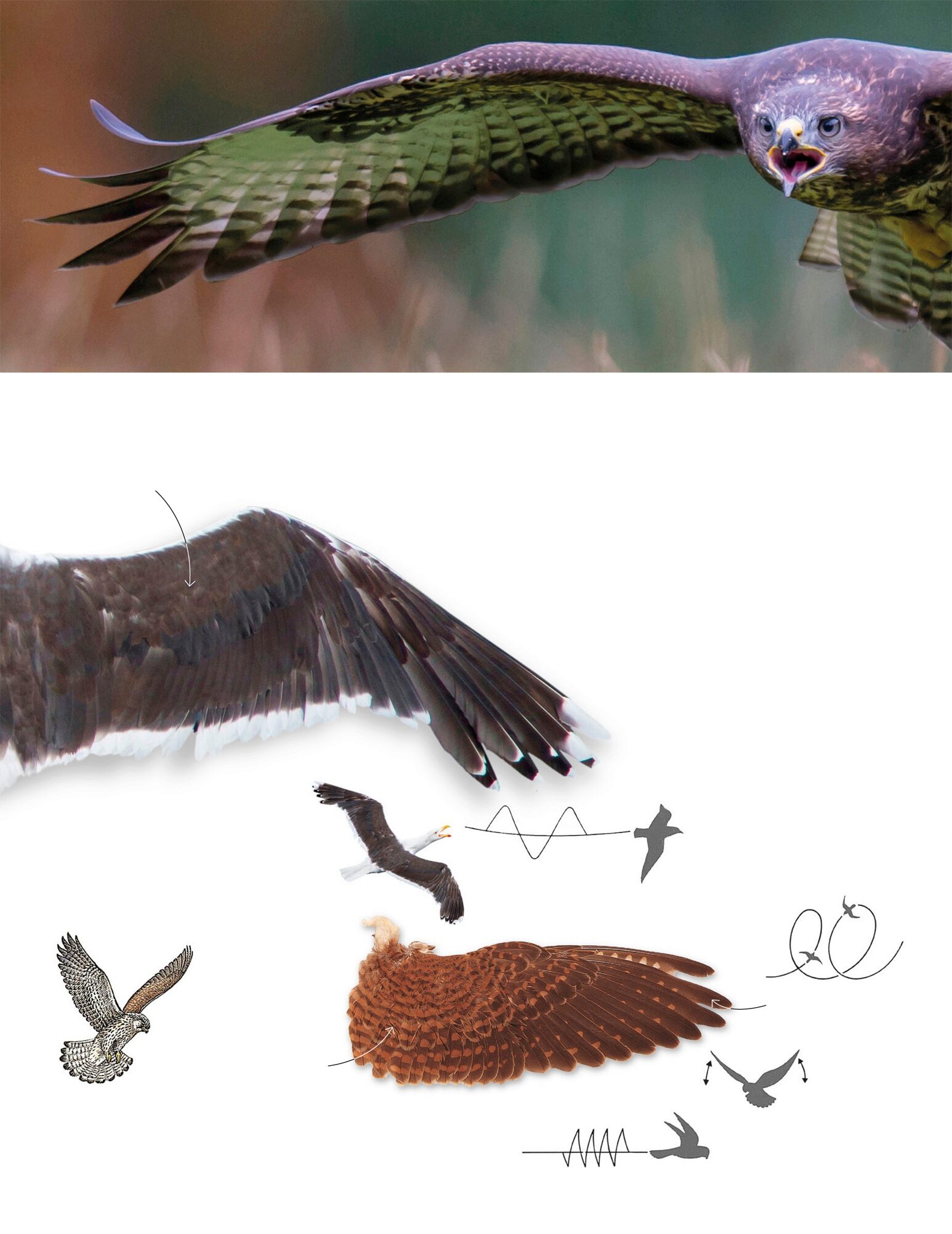
Birds have evolved different ways of flying.
Some, such as large seabirds, save energy
by soaring and gliding. Other birds
hover, keeping still in the air by
beating their wings non-stop.
Narrow wing
provides lift
when gliding
Great black-
backed gull wing
Gull flight
In flapping flight, a gull may
travel at 40 kph (25 mph) while,
in a strong updraught, it can stay
motionless over the ground.
Gliding gulls
Slender, pointed wings enable
gulls to glide on updraughts – currents
of air deflected upwards by cliffs and
hillsides. The lift generated by
these updraughts is enough to
support the great black-backed gull.
Great black-
backed gull
Inner wing
coverts mould
wing to body
Primary flight feathers
reduce turbulence.
Kestrel wing
Kestrel
Hanging in the air
The kestrel hovers as its keen eyes
pinpoint shrews and voles from
high overhead.
Kestrel flight
The kestrel has a
fluttering forward
flight typical of falcons.
Kestrel
hovering
The wings
beat rapidly
and the tail is
fanned out to
provide lift.